

Understanding Cyber Threats in Ontario
If your business operates in Barrie or surrounding regions of Ontario, you need to stay alert to evolving cyber threats. With Canadian small and mid-sized businesses (SMBs) increasingly becoming targets of malicious campaigns, understanding local risk is essential. From ransomware to phishing, knowing the nature of these attacks allows organizations to plan proactively, protect sensitive information, and remain compliant with Canadian data regulations.
Protect your business with trusted IT Services in Barrie from Pavliks — your Microsoft, Sophos, and Veeam-certified experts. Explore our complete Cyber Security Solutions in Barrie to safeguard data, prevent downtime, and secure your network. Book a Free IT Consultation today and discover the difference local expertise makes.
What Are Cyber Threats?
Cyber threats refer to malicious attempts to damage, disrupt, or gain unauthorized access to digital systems, networks, or data. These threats can originate from lone hackers, criminal syndicates, or state-sponsored actors and come in many forms, including malware, phishing, ransomware, business email compromise (BEC), and insider attacks. For businesses, these intrusions often lead to data breaches, financial loss, reputational harm, and legal implications.
The Local Landscape: Why Ontario Is a Target
Ontario’s economic strength and broad base of SMEs make it a prime target for cybercriminals. From dental clinics and law firms in Barrie to manufacturing hubs and nonprofits around the GTA, attackers know that many local organizations lack enterprise-grade defenses. Additionally, digital transformation, remote work, and interconnected vendor systems increase vulnerability across sectors.
Ontario saw a 23% increase in SME-targeted ransomware attacks in 2023 – Government of Ontario Cyber Security Report.
Emerging Threat Patterns in Canadian SMBs
Recent trends show rapid growth in sophisticated cyberattacks aimed squarely at SMBs that often don’t anticipate such threats. These include fileless malware, social engineering scams, third-party breaches, and targeted ransomware campaigns. According to national data:
Cybersecurity crimes cost Canadian businesses over $6.4B last year — with 45% of all incidents involving SMBs.
Stay informed and assess your current cybersecurity posture—understanding is your first line of defense in an evolving threat landscape.
Why Small and Medium Businesses Are Targeted
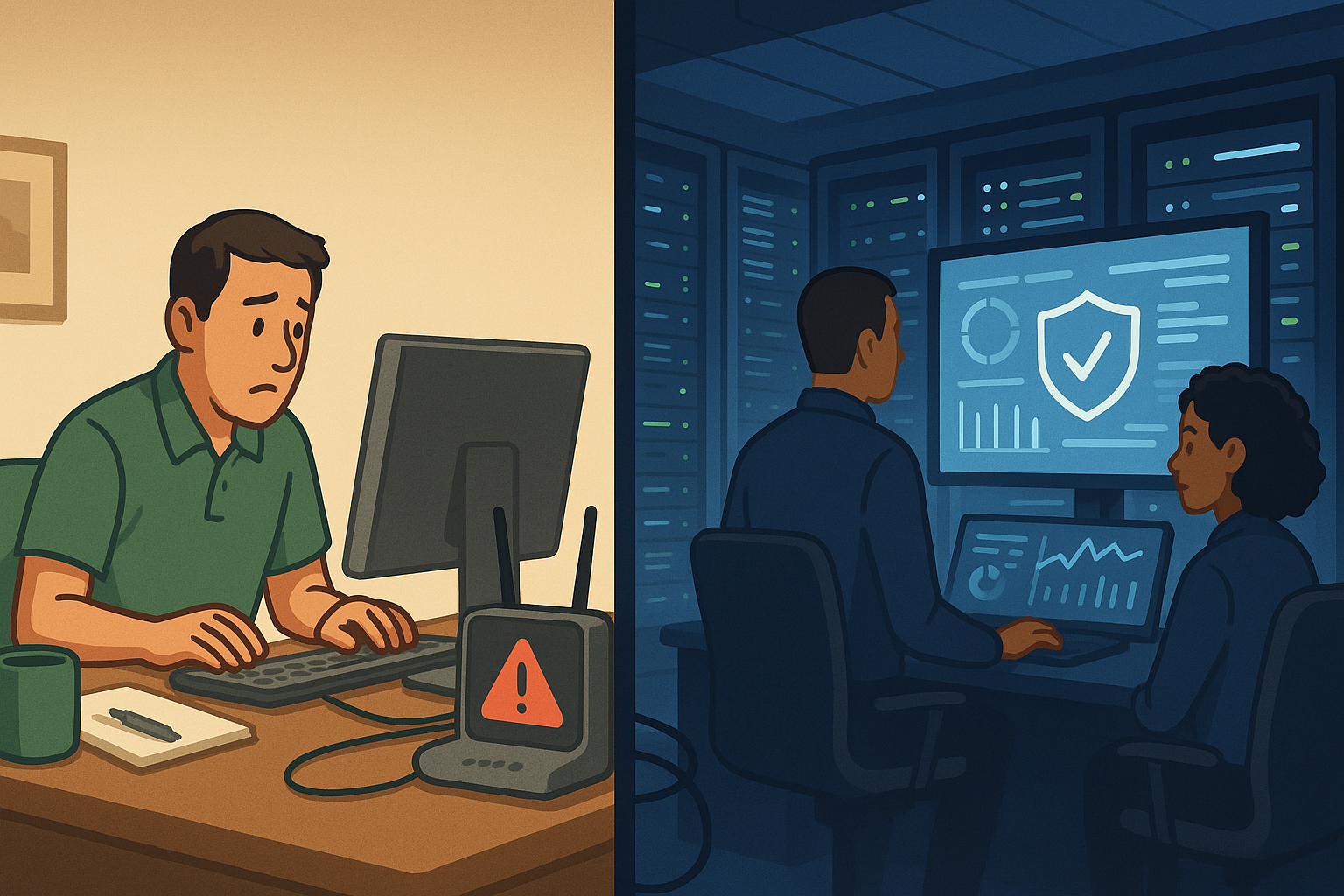
Running a small or medium-sized business in Ontario—whether you manage a real estate team in Barrie, a medical clinic in Orillia, or a nonprofit in Midland—makes you a prime target for cyberattacks. Criminals see SMBs as low-hanging fruit: profitable enough to ransom or defraud, but often lacking adequate defense systems. Understanding why attackers focus on this segment helps diagnose vulnerabilities and build resilience.
Lack of IT Resources
Many SMBs operate with minimal in-house IT support. Without dedicated cybersecurity professionals or automated monitoring solutions, signs of intrusion often go undetected until it’s too late. Budget constraints force business owners to prioritize daily operations over proactive protection, increasing exposure to cyber threats that exploit unpatched systems or insufficient safeguards.
70% of cyber attacks in Canada target small and midsize businesses – Canadian Centre for Cyber Security.
Vulnerable Legacy Systems
Outdated hardware and software are still in use across many Ontario-based SMBs. These legacy systems often lack ongoing security updates and may be incompatible with modern cybersecurity tools. For attackers, older infrastructure provides predictable vulnerabilities that make it easier to gain a foothold and execute data exfiltration or system lockouts.
High Human Error Exposure
Employees at smaller organizations typically wear multiple hats, often without formal cybersecurity training. Mistakes such as clicking malicious links, reusing passwords, or falling for phishing emails are common entry points for attackers. Without regular awareness programs, SMBs remain highly vulnerable to social engineering and credential theft.
Many Ontario SMBs still lack cyber resilience plans, leaving them unprepared for even basic cyber incidents.
Recognizing why hackers focus on SMBs is critical—take action by evaluating your IT vulnerabilities and building that first defense line today.
Most Common Cyber Threats Facing Ontario Businesses Today
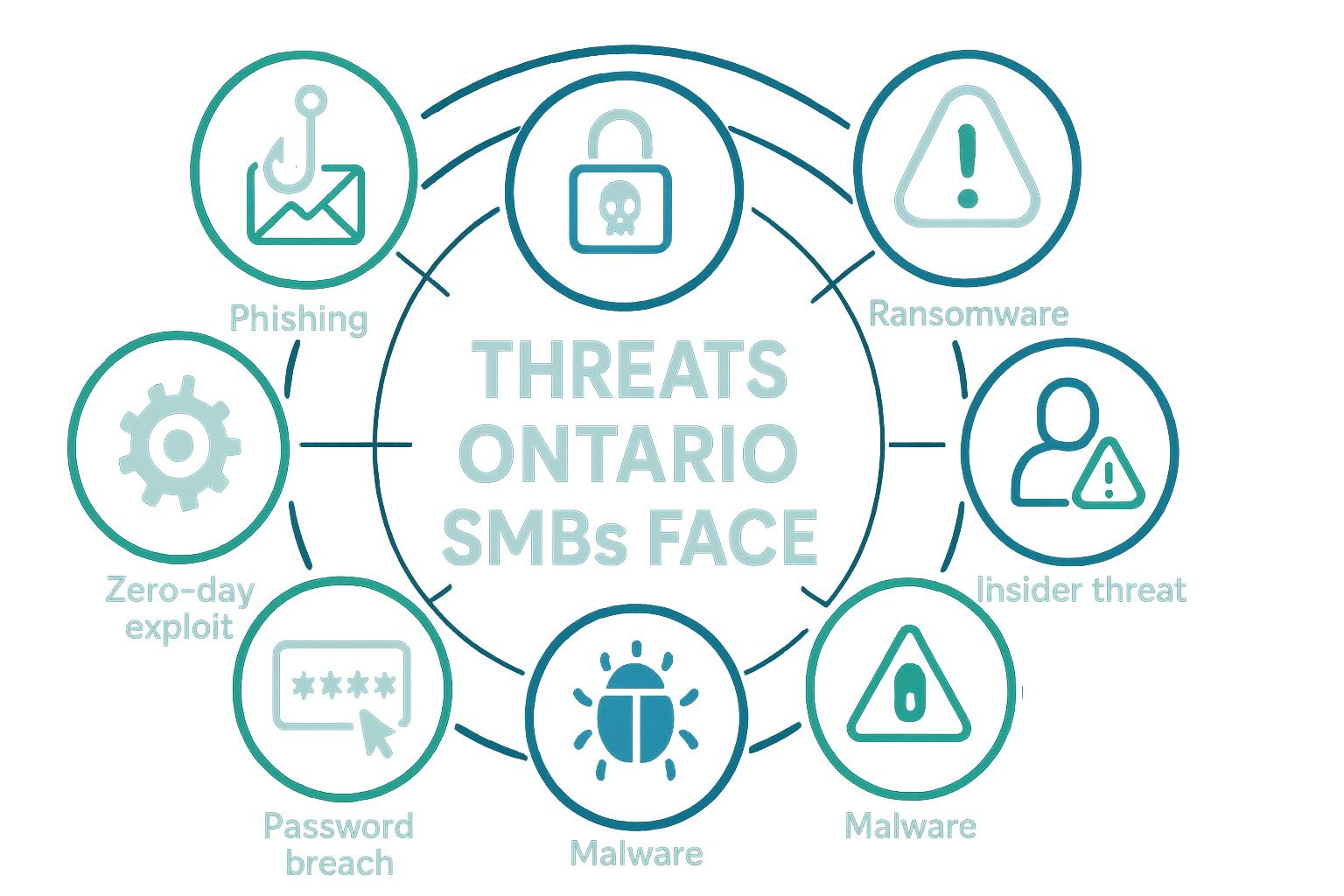
Running a business in Barrie or anywhere in Ontario means facing cyber threats that are increasingly sophisticated and locally impactful. The digital risks aren’t theoretical—they’re actively targeting law firms, physiotherapy clinics, equipment suppliers, and municipal offices alike. Below are the leading attack types Ontario SMBs need to guard against in 2024, backed by real incidents and expert insight.
1. Phishing Attacks
– How Phishing Works
Phishing involves fraudulent emails, texts, or messages that trick recipients into clicking malicious links or revealing sensitive information. Cybercriminals often impersonate banks, government agencies, or even internal staff to gain your trust before exploiting your systems.
– Spotting Phishing Emails
Watch for red flags like unusual sender addresses, urgent language, misspellings, suspicious links, and unexpected attachments. Staff should be trained to report—rather than respond to—questionable messages.
2. Ransomware
– Real-World Examples in Ontario
In May 2023, a medical clinic in Barrie was forced into a week-long shutdown due to a ransomware attack that encrypted sensitive patient records. Without immediate access to files and limited backup infrastructure, operations stalled, and reputation damage was severe.
– Impact on SMBs
Ransomware encrypts data and demands payment for decryption keys. Downtime, compliance violations, and lost productivity are common outcomes of these attacks. Without offsite backups and a recovery plan, the costs quickly escalate.
3. Malware and Viruses
Malicious software can infect your systems via infected downloads, USB devices, or email attachments. Once active, it can steal data, monitor activity, or even convert your system into part of a botnet. SMBs often miss malware until significant damage has occurred.
4. Insider Threats
Former employees, disgruntled staff, or even negligent users can pose insider risks. Whether through intentional sabotage or accidental mishandling of data, insider threats are harder to detect and often bypass perimeter defenses.
5. Business Email Compromise (BEC)
In a BEC scam, attackers spoof or hijack executive email accounts to authorize fake wire transfers or HR/payroll changes. These scams are growing rapidly across Ontario businesses.
BEC scams are up 67% across Ontario businesses with under 50 employees.
6. Denial-of-Service (DoS) Attacks
DoS attacks flood networks with traffic, taking websites or services offline. While more common among larger targets, SMBs with online storefronts or client portals are increasingly experiencing smaller-scale DoS attacks that disrupt operations.
7. Third-Party Vendor Risks
Criminals often infiltrate smaller vendors or IT support providers as a way of accessing larger or better-protected targets. Any Ontario business that relies on external contractors, SaaS providers, or managed services must ensure those vendors meet robust security standards.
Knowing your enemy is half the battle—identifying relevant cyber threats equips you to focus your defenses where they count most.
Trends in Cyber Attacks Specific to Ontario
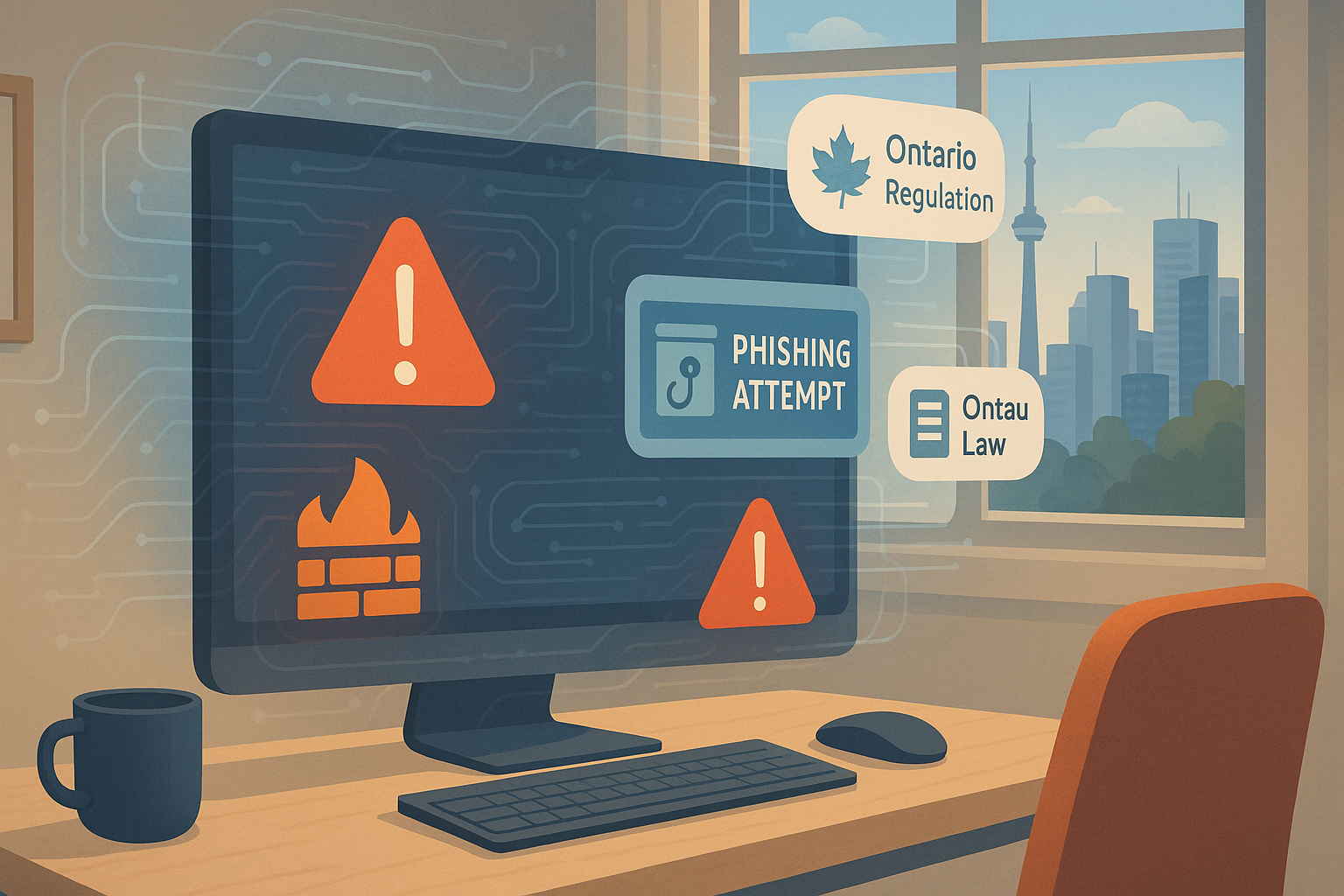
Ontario businesses—particularly small and mid-sized organizations in Barrie and surrounding areas—face increasingly sophisticated cyber threats shaped by regional working habits, new technologies, and evolving provincial regulations. Understanding these localized threat dynamics is essential for developing an effective cybersecurity posture that aligns with both security requirements and compliance laws such as Ontario’s Bill 190.
New Threat Vectors Due to Remote Work
Remote and hybrid work setups have expanded the attack surface across Ontario industries. Cloud storage misconfigurations, unsecured home Wi-Fi networks, and personal device use have become common attack gateways for hackers. A recent study by the Canadian Society for Cybersecurity found that remote workers are three times more likely to be the entry point for a data breach. This trend underscores the need for endpoint protection, VPN usage, and ongoing cyber hygiene training.
AI-Powered Threats Emerging in 2024
AI is not just enhancing cybersecurity—it’s also empowering cybercriminals. In 2024, Barrie businesses are seeing a surge in deepfake spear-phishing emails, automated password-cracking bots, and AI-generated malicious code. These attacks are faster and harder to detect using traditional methods. Recognizing the capabilities and signatures of AI-driven threats is crucial for staying ahead of rapidly-changing threat landscapes.
Cyber Regulations and Compliance in Ontario
Ontario has doubled down on data privacy and breach disclosure obligations. Under Bill 190, organizations must promptly report breaches that affect client data, whether due to phishing or ransomware. Municipal offices, schools, and healthcare providers must also comply with additional sector-specific IT security frameworks. Cyber governance in 2024 requires clearly documented policies, secure data handling protocols, and proof of due diligence for audits or insurance claims.
Stay proactive by regularly reviewing emerging threat patterns and preparing your IT infrastructure to adapt swiftly to Ontario’s evolving cyber landscape.
How to Protect Your Business
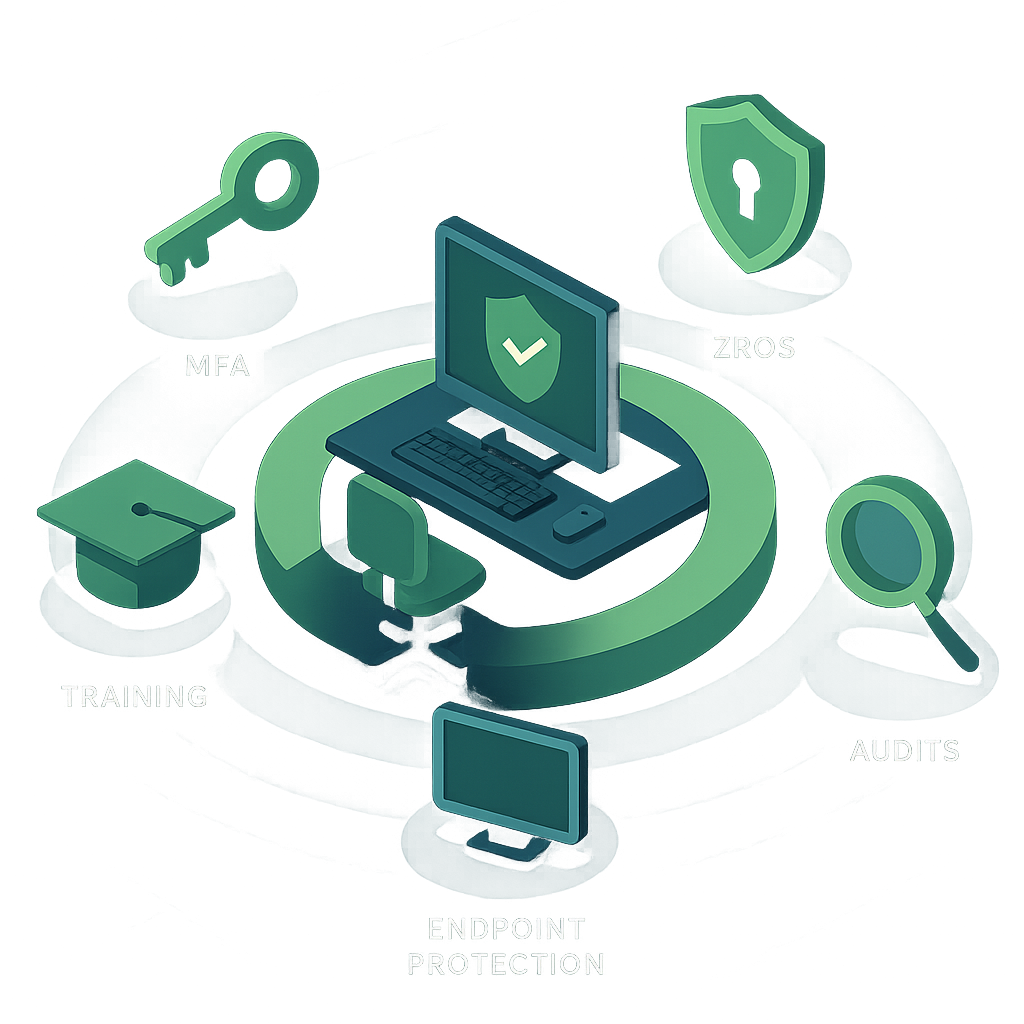
If you’re running a business in Barrie, ON or nearby, mitigating cybersecurity risks means embracing a layered defense strategy. From real estate firms to physiotherapy clinics, local SMBs need adaptable, practical protection tailored to both industry regulations and emerging cyber threats. Let’s break down the essentials for a stronger cybersecurity posture in 2024.
Employee Training and Awareness
Employees are often the first line of defense—and the weakest link if left untrained. A well-informed team can spot phishing attempts, avoid social engineering traps, and follow secure IT practices. According to the IBM Cyber Security Index, preventing human error can reduce breach risk by up to 85%. Regular training sessions, simulated attacks, and updated policy handbooks are must-haves.
Implementing Multi-Factor Authentication
MFA adds an essential layer of access control by requiring users to present two or more credentials before gaining system access. Whether through SMS codes, authentication apps, or physical tokens, MFA significantly lowers the chance of unauthorized access—especially when staff work remotely or on shared networks.
Regular System Updates and Patching
Unpatched systems are low-hanging fruit for cybercriminals. Ensure all operating systems, applications, and firmware are routinely updated. Many businesses in Barrie fall victim to outdated systems—vulnerabilities that could be prevented with automated patch management solutions.
Conducting Security Audits and Risk Assessments
Security audits help identify blind spots and weaknesses in your current cybersecurity framework. Risk assessments uncover which systems, data, or operations are most at risk. Having an expert cybersecurity partner conduct regular evaluations ensures continuous improvement and regulatory compliance.
Adopting Zero-Trust Architecture
Zero trust eliminates implicit trust by verifying each access attempt—whether from inside or outside the network. This modern approach reduces damage from stolen credentials or insider threats. Implementing a zero-trust model can cut insider breach risks by up to 50% when supported by access control and behavioral analytics.
Choosing a Cybersecurity Partner in Ontario
Partnering with a local IT services provider like Pavliks Cyber Security and IT Services means having on-site support, sector-specific insights, and proactive monitoring tailored to Ontario’s business environment. Your cybersecurity strategy should be a business enabler—not an obstacle. Trust experts to implement, manage, and evolve your defense approach as threats change.
Take control of your tech—lock down your data and level up your IT. Book your free vPen Test and IT Consultation with Pavliks today and discover seamless protection, 24/7 support, and on-site service across Barrie and Ontario.
Resources and Further Reading
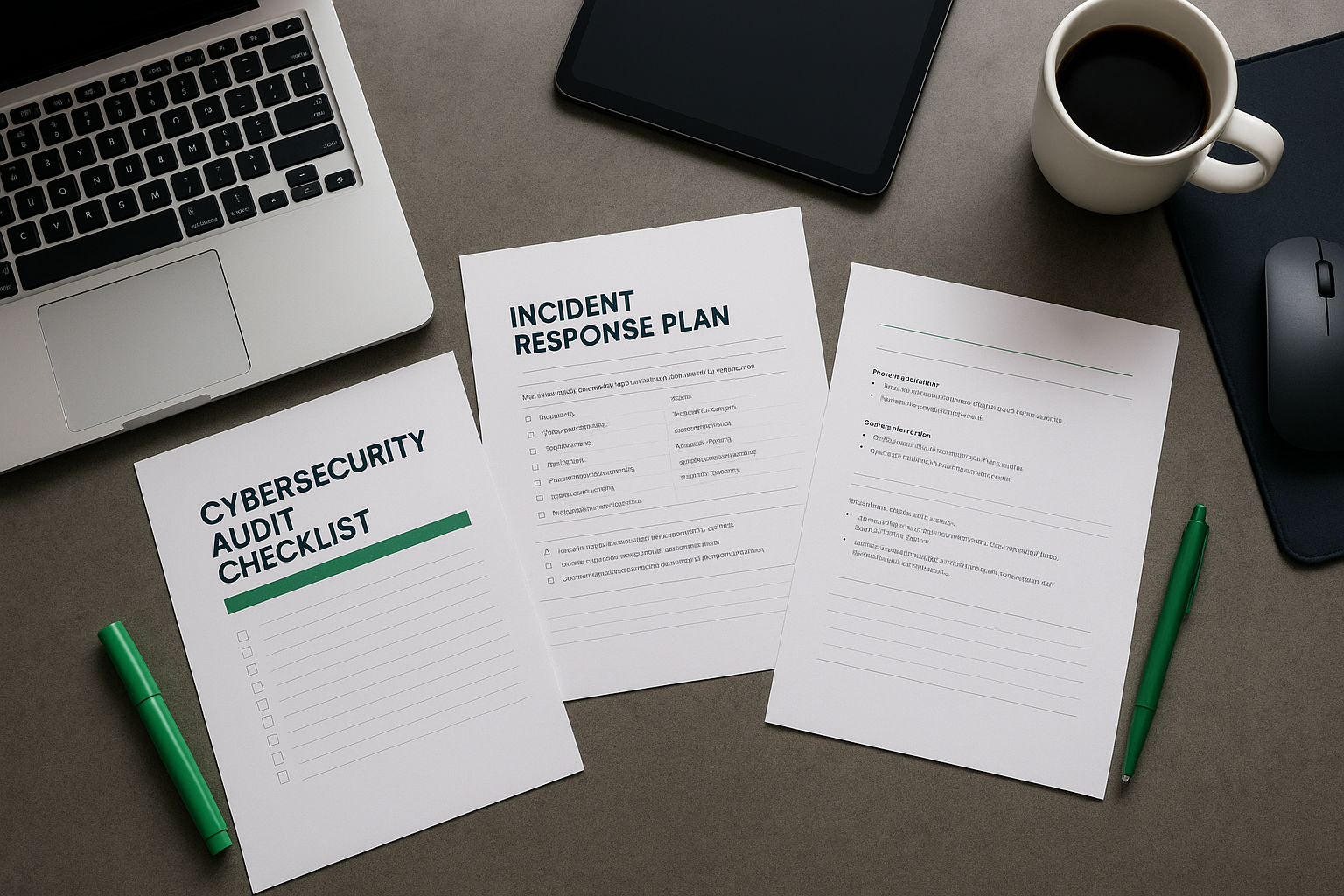
Your cybersecurity journey doesn’t stop here. Whether you’re a nonprofit in need of a breach response protocol or a manufacturing firm prepping for compliance audits, the right resources can make all the difference. Below are practical tools and contact options curated for Ontario business leaders.
Recommended Ontario Government Cyber Resources
Explore official resources such as Ontario’s Cyber Security Centre of Excellence (CSCOE), the Canadian Centre for Cyber Security (CCCS), and provincial guidelines under the Freedom of Information and Protection of Privacy Act (FIPPA). These institutional platforms offer threat alerts, security best practices, and sector-specific advisories.
Downloads: Incident Response Templates & Audit Checklists
Pavliks provides downloadable audit checklists, breach notification templates, and security documentation tailored to small and mid-sized Ontario businesses. These practical assets simplify IT documentation and improve preparedness for internal reviews or insurance assessments.
How to Reach Pavliks’ Cybersecurity Team for a Free Health Check
If you’re a business located in Barrie or surrounding Ontario communities, our expert cybersecurity technicians can perform a free vPen Test and system health check. Get actionable insights on vulnerabilities, system integrity, and compliance status—all without obligation.
Take control of your tech—lock down your data and level up your IT. Book your free vPen Test and IT Consultation with Pavliks today and discover seamless protection, 24/7 support, and on-site service across Barrie and Ontario.